
Hiring an electrician in Texas comes with three license tiers, and most homeowners don’t know the difference until something goes wrong. The state regulates electrical licenses through the Texas Department of Licensing and Regulation (TDLR), and each level has specific limits on what that person can legally do on your job. The master electrician vs. journeyman question matters because the wrong license pulling your panel permit can stall a project, fail an inspection, or leave the work outside your homeowner’s policy. Here’s what each license covers in Texas, and when it matters for the work on your house or business.
Master Electrician vs. Journeyman vs. Apprentice – The Three Texas Licenses
TDLR licenses three levels: apprentice, journeyman, and master. Each has different training requirements, different legal authority, and different limits on what they can do unsupervised.
Apprentice Electrician
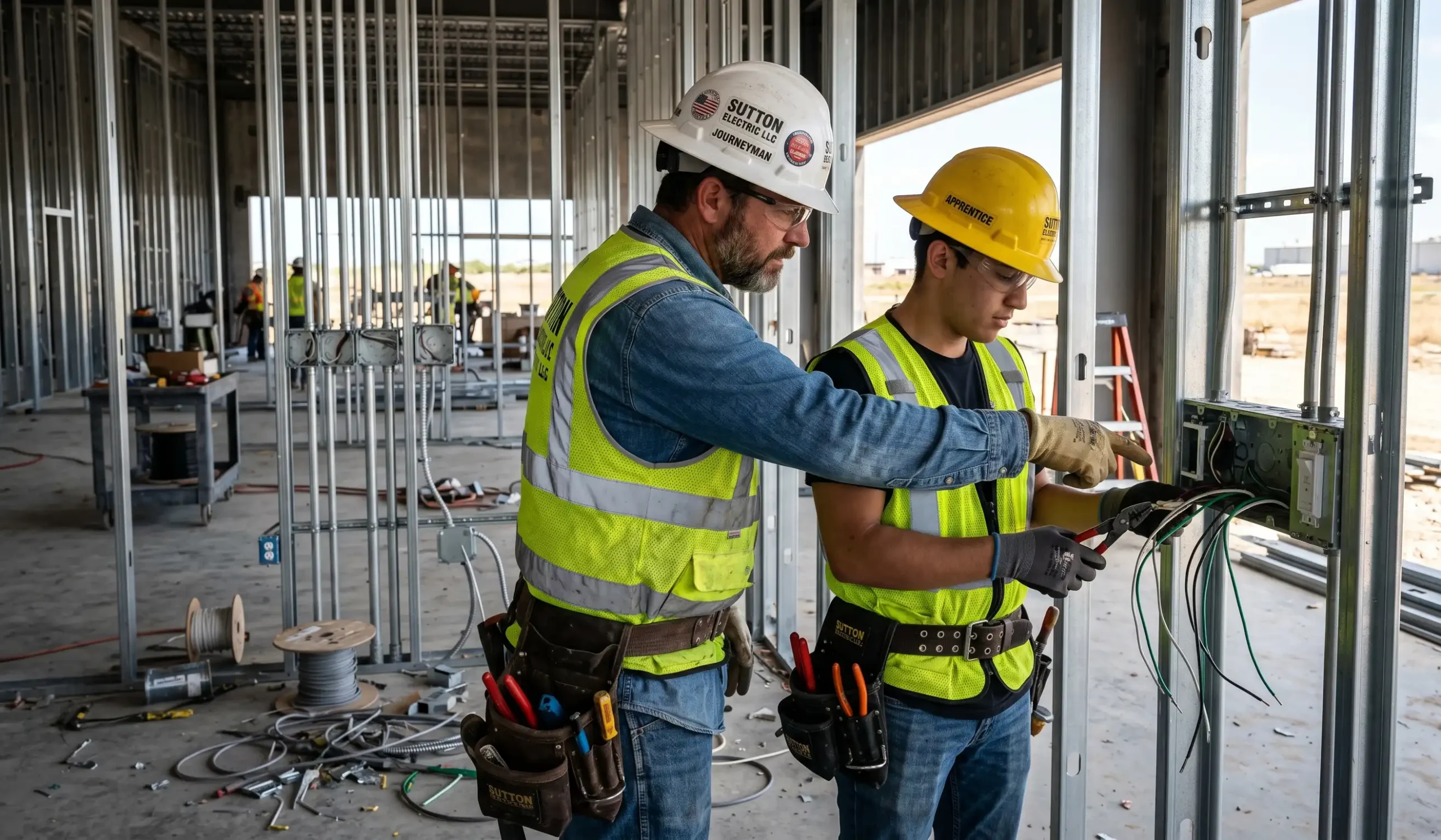
An apprentice is registered with TDLR and working toward a journeyman license. They can do electrical work, but only under the direct supervision of a journeyman or master electrician. Apprentices cannot pull permits, run a job, or sign off on anything. They can be on your property doing the physical work, but a licensed electrician has to be responsible for the install.
Apprentices log hours. To sit for the journeyman exam, they need 8,000 hours of documented on-the-job training, which is roughly four years of full-time work.
Journeyman Electrician
A journeyman has passed the Texas journeyman exam and can work without supervision on most residential and commercial jobs. Journeymen wire houses, troubleshoot circuits, replace panels, pull wire, terminate conductors, and handle most of the physical electrical work in the state. They can supervise apprentices.
What a journeyman cannot do: pull permits in most Texas cities, sign plans for commercial projects, run an electrical contracting business, or employ other electricians under their own license. Journeymen work for master electricians or for a licensed contractor.
Master Electrician
A master electrician has passed a separate master’s exam after logging 12,000 hours of work as a journeyman, another four years roughly. The master license is what lets someone sign plans, pull permits, supervise a full crew, and legally run an electrical contracting company in Texas.
In plain terms: every licensed electrical contractor in Texas has a master electrician somewhere in the business, either the owner or a master on staff. No master, no permit, no legal contracting authority.
Who Can Legally Pull a Permit in Texas
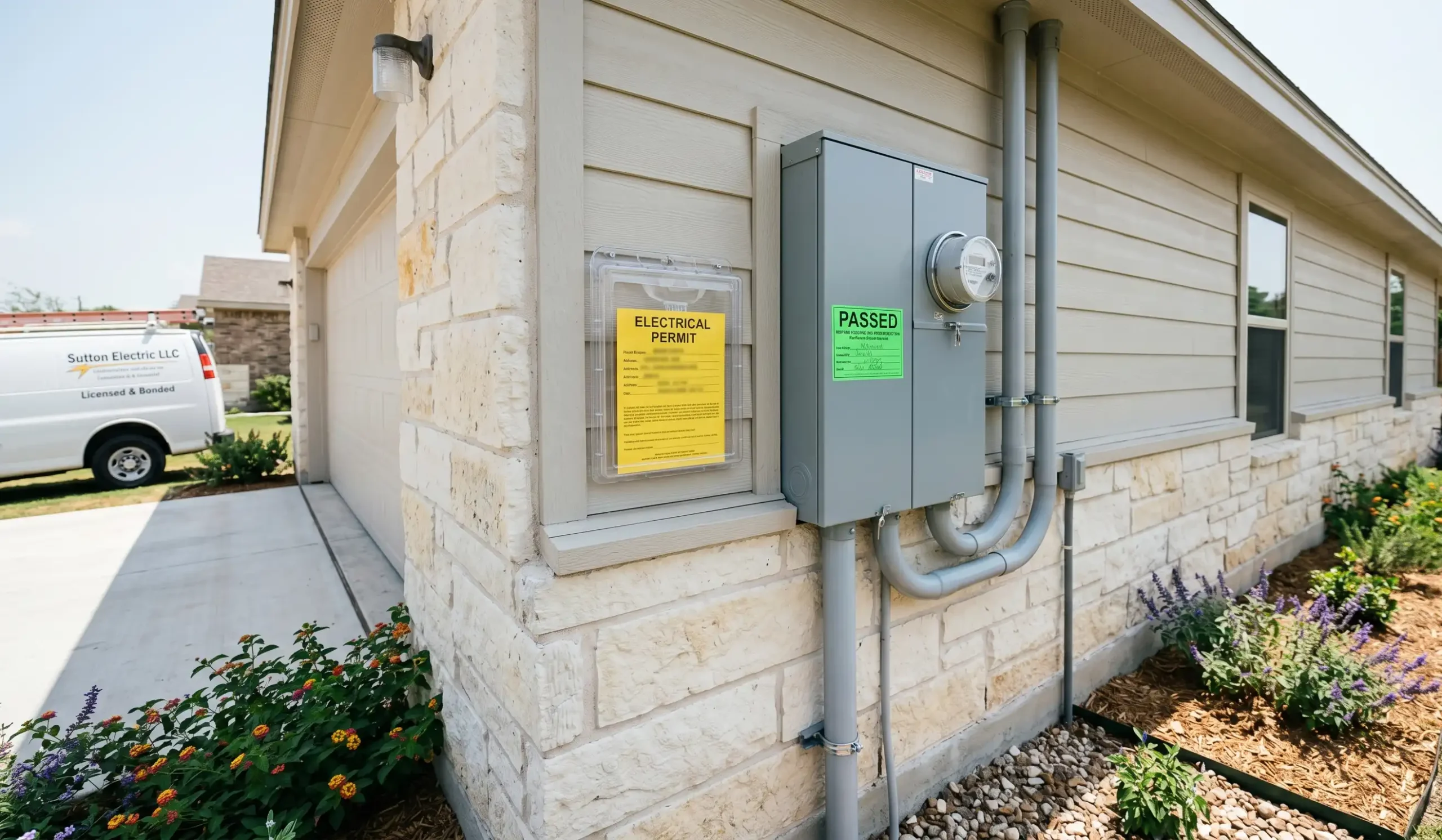
Permits in Cuero, Yorktown, Goliad, and most DeWitt County addresses have to be pulled by a licensed electrical contractor. That contractor has to have a master electrician of record with TDLR. A journeyman by themselves cannot pull the permit. An apprentice cannot pull the permit.
This matters for one reason: if work is done on your home without a permit where a permit was required, the work isn’t covered. That shows up when you sell the house and a buyer’s inspector catches it, or when your insurance denies a claim after an electrical fire. If someone quotes your panel upgrade at $1,200 when the going rate is $3,500, the difference is usually the permit.
When You Need a Master Electrician vs. a Journeyman on the Job
For most small residential repairs, a journeyman working under a contractor handles the job. Installing a ceiling fan, replacing an outlet, troubleshooting a dead circuit. Those don’t usually require permit work, and a journeyman handles them routinely.
A master electrician matters when:
- You’re pulling a permit, including panel upgrades, service changes, new construction, or major remodels
- You’re running a commercial build-out with signed plans
- You’re doing an inspection that has to hold up in a real estate transaction
- You’re installing a standby generator or EV charger that requires a service upgrade
- You want the person running the job to carry responsibility for the install, not someone working under someone else
For the projects where a master is required, see our full list of electrical services.
What to Ask Before You Hire an Electrician in Cuero
Before you sign anything, get three things in writing!
- The company’s Texas electrical contractor license number. Look it up on the TDLR website.
- The master electrician’s license number. TDLR shows it for every active licensee.
- Whether the work requires a permit, and who’s pulling it. If they say you don’t need one, call the city to confirm before you agree.
Any contractor that hesitates on any of those three is not the right one.
Why Sutton Electric Works This Way
Charles Sutton holds Texas master electrician license #206741, has 20+ years in the trade, and spent three years as the City of Corpus Christi’s electrical inspector before opening Sutton Electric. That means he wrote the corrections on other electricians’ work for three years. He knows what inspectors look for, what fails, and what has to be right the first time.
Ready to Hire a Licensed Master Electrician?
If you have a project coming up and want to make sure a Texas master electrician is the one responsible for the work, call Sutton Electric at (361) 232-7171 or request a free estimate. One licensed electrician, one license, one name on the permit.
Frequently Asked Questions
What is the difference between a master electrician and a journeyman in Texas?
A master electrician can pull permits, sign plans, and run a contracting business after logging 12,000 hours as a journeyman. A journeyman works unsupervised on most jobs but cannot pull permits or run a company.
Can a journeyman pull an electrical permit in Texas?
No. Only a licensed electrical contractor with a master electrician of record with TDLR can pull permits in Cuero, Yorktown, Goliad, and most Texas cities.
How many hours does it take to become a master electrician in Texas?
A total of 20,000 hours, 8,000 as a registered apprentice to qualify for the journeyman exam, then another 12,000 as a journeyman before sitting for the master’s exam.